
RUDRA
The God Who Chose Nothing
RUDRA
The God Who Choose Nothing

Discover Shiva Beyond Mythology
An extraordinary retelling of the Shiva Purana that brings together mythology, philosophy, love, devotion, and timeless wisdom for today's generation.
"The divine is encountered not in comfortable distance, but in the messy, contradictory, beautiful fullness of life." reviews for rudra
Read the Synopsis
The God Who Chose Nothing reimagines key mythological narratives from the Puranas and Tantric traditions, presenting Shiva not as a distant deity but as an immediate presence—contradictory, impossible to contain in known categories.
The book opens with Shiva as primordial consciousness, creation itself. Enter Sati—the first love, whose choice to immolate herself at her father's yagna after he insults Shiva triggers the Tandava, Shiva's dance of destruction that nearly unmakes reality. Vishnu must intervene, scattering Sati's body across the earth. Shiva withdraws into meditation so deep it seems permanent.
But Sati returns as Parvati, daughter of the Himalayas. Despite warnings that Shiva is "dangerous" and "destroys what he loves," she seeks him out. What follows is a tapasya (spiritual austerity) so intense it forces the universe itself to take notice.
Shiva tests her repeatedly, but Parvati's devotion outlasts every obstacle. Their eventual union—portrayed through an actual wedding ceremony with real vows—leads to the first night of marriage, depicted with tenderness and psychological insight rare in mythology retellings.
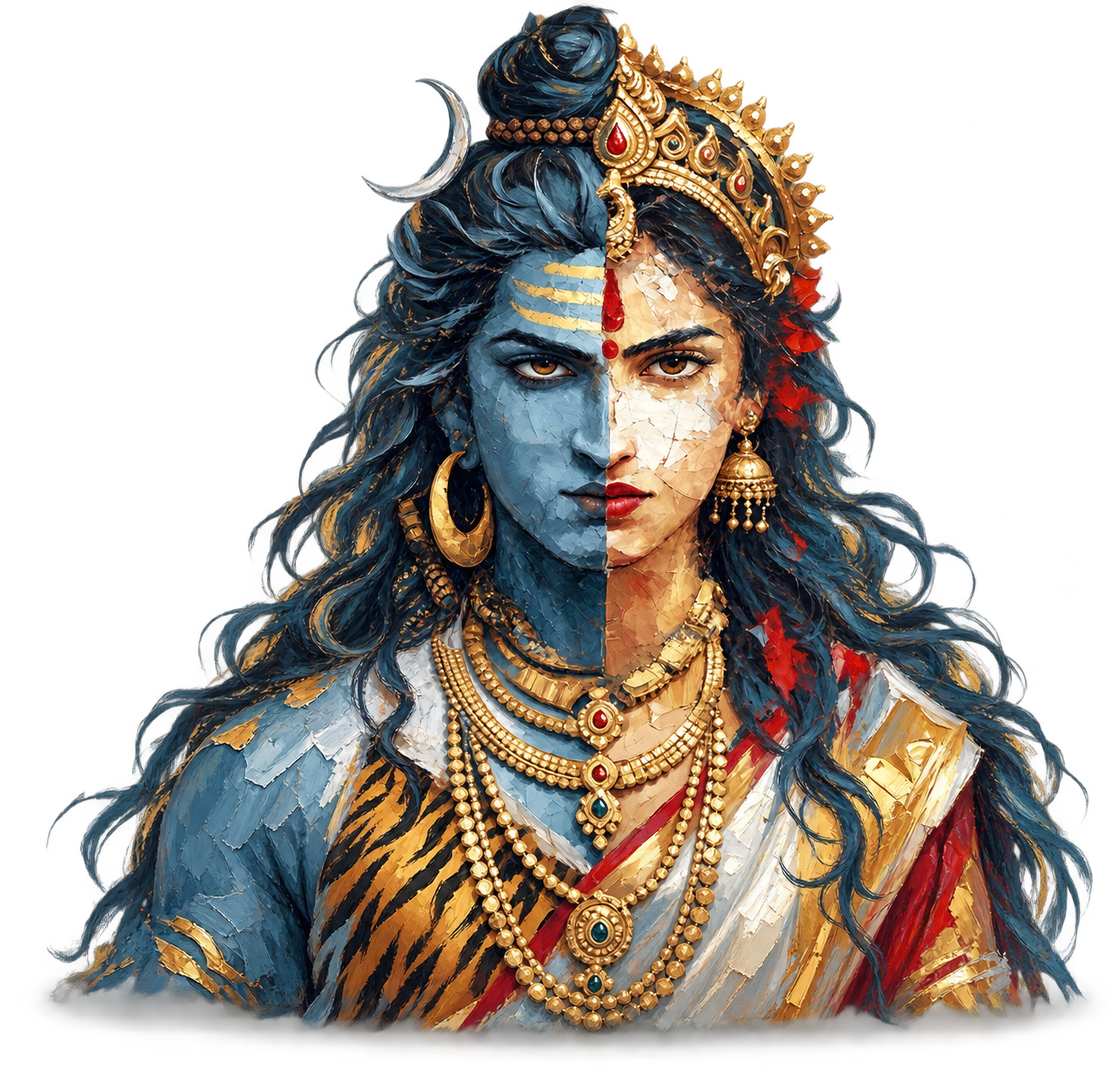
The romance culminates in the Ardhanarishvara transformation: Shiva and Parvati literally merge into a single form, half-masculine and half-feminine, teaching that wholeness doesn't come from finding your "other half" but from recognizing the complete integration of opposites within yourself.
Ganesha and Kartikeya appear as brothers from different worlds—one playful and wise, one disciplined and martial. Their conversations reveal Shiva as a father who teaches through complementary methods: Ganesha places obstacles that force reflection; Kartikeya clears obstacles through direct action. Together they show that divine parenting, like human parenting, requires holding opposing forces in balance.
Ravana receives nuanced treatment rarely afforded to him. His tapasya is genuine—he severs his own heads one by one, offering them to Shiva until the god appears and grants him near-invincibility. But when Ravana later tries to lift Mount Kailash itself, Shiva pins the mountain down with one toe, crushing him.
In agony, Ravana composes the Shiva Tandava Stotram, one of the most beautiful hymns ever created. He emerges as tragedy rather than villainy: the devotee who reached the divine but couldn't release the ego doing the reaching.
The Mahakala chapter explores Shiva as master of time—not subject to temporal flow but containing it, the stillness that allows all motion, the consciousness that witnesses endings without being touched by them. Written as philosophical prose-poetry, it challenges readers to recognize their own nature as awareness rather than the phenomena awareness observes.
Through the Samudra Manthan (churning of the ocean), readers witness Shiva as Neelakantha. When the deadly poison emerges—so toxic it threatens all existence—Shiva drinks it without hesitation. Parvati clasps his throat, preventing the poison from descending, and it remains lodged there permanently, staining his throat blue.
The chapter explores why Shiva holds suffering without spreading it, transforming personal sacrifice into universal protection.
The author examines Shiva's relationship with the Aghoris—ascetics who dwell in cremation grounds and embrace what society designates as impure—with sensitivity and depth in the most controversial chapter.
This isn't an endorsement of extreme practices but an exploration of non-dual philosophy: the dissolution of boundaries between pure/impure, sacred/profane, acceptable/taboo. It asks uncomfortable questions about whether spirituality that requires avoiding half of reality can actually be called spiritual.
Everything converges at Kailash, the cosmic axis. Here, karma becomes visible—ropes connecting every being to everyone they've affected and everyone who's affected them. Souls confront accumulated consequences not through external judgment but through revelation.
Shiva's stillness serves as a perfect mirror. Parvati appears not to rescue but to sustain—her love making the unbearable truth bearable. The chapter reveals Kailash punishes nothing; it simply reveals everything.
The book operates on multiple levels simultaneously, offering interesting retellings that honor the source material while adding psychological depth and contemporary accessibility. Explorations of non-duality, the relationship between consciousness and energy (Shiva and Shakti), karma as lived reality rather than an abstract concept, and the paradox of seeking freedom through form run throughout the narrative.
Every mythological story illuminates contemporary questions—How do we hold pain without spreading it? What does real partnership look like? How do we parent children toward their own wholeness? When does devotion become ego? How do we encounter death consciously?
About the Book
Ancient Wisdom. Modern Relevance.
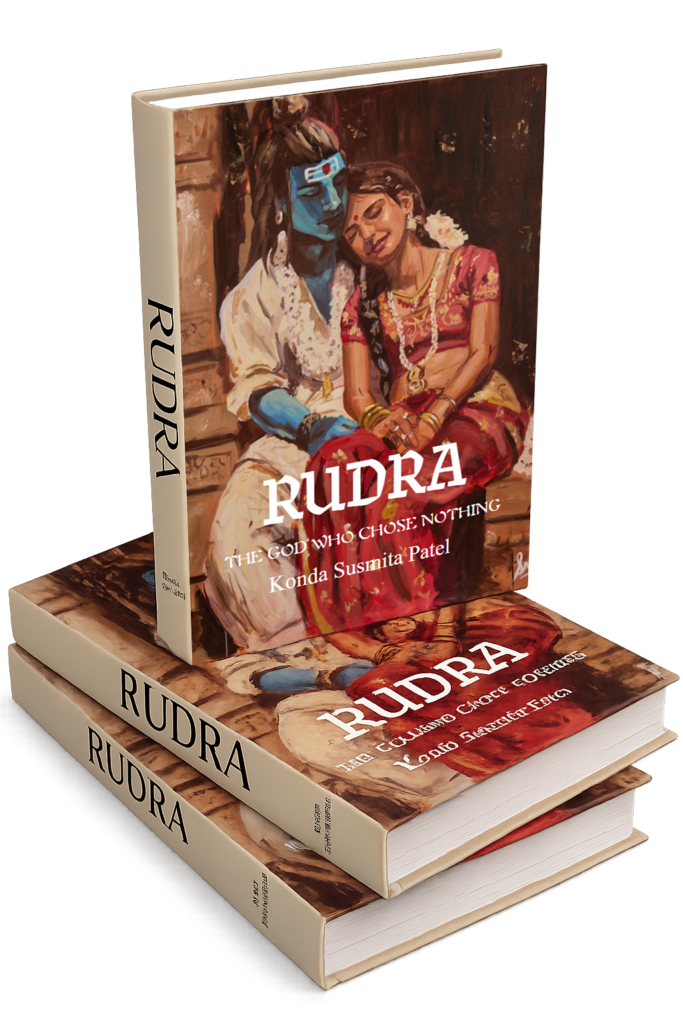
RUDRA: The God Who Chose Nothing reimagines the timeless stories of Lord Shiva from the Puranas and Tantric traditions, presenting Him not as a distant deity but as an immediate, living presence.
From Shiva and Sati’s heartbreaking separation to Parvati’s unwavering devotion, from the symbolism of Ardhanarishvara to the profound lessons of Mahakala, Neelakantha, Ravana, Kailash, Ganesha, and Kartikeya—each chapter uncovers the deeper psychological and spiritual truths hidden within these ancient stories.
Rather than simply retelling mythology, this book connects these narratives with modern questions about love, identity, purpose, sacrifice, family, karma, and inner transformation.
What Makes RUDRA Different?
Why You'll Love This Book
A fresh, modern perspective on Shiva rooted in authentic traditions.
Ancient stories connected to love, life, and personal growth.
A deeper exploration of Shiva and Parvati’s powerful love story.
Timeless insights on karma, consciousness, devotion, and non-duality.
Complex spiritual ideas explained through simple, relatable storytelling.
A journey of self-discovery, transformation, and understanding.
What They Say About Rudra
Long back, I read a book called Savitri, and I understood the weight that lives behind every page, and it baffled me. If that was the first one then Rudra was the second.
Even without reading every word, I can recognize the work that has gone into this one. But what makes this book different is not just what it contains — it is what it represents...
V Vijayendra Prasad
Writer of Baahubali & RRR
Long back, I read a book called Savitri, and I understood the weight that lives behind every page, and it baffled me. If that was the first one then Rudra was the second.
Even without reading every word, I can recognize the work that has gone into this one.
But what makes this book different is not just what it contains — it is what it represents.
People will pick it up because of Susmita. And when they put it down, they will know her not as the Konda couple's daughter, not as an extension of a legacy she was born into, but as Konda Susmita Patel, the Author — a name she has earned, a story she has written herself.
This book is not just her voice. It is the beginning of her own chapter in history.
A Gen'z girl writing a book based on SIVA PURANA which is spiritual has caused both shock and surprise.
In fact, it is an eye opening to youth as well. She has written about the Siva-Parvati marital relationship and also about Siva's family...
Tanikella Bharani
Indian Actor & Screenwriter
Konda Surekha daughter Konda Sushmita Patel has written a book titled "Rudra".
First surprisingly, in today's generation which is addicted to various forms of writing esp. fiction and other genre's.
A Gen'z girl writing a book based on SIVA PURANA which is spiritual has caused both shock and surprise.
In fact, its an eye opening to youth as well.
Also, she has given a beautiful name GOD WHO CHOSE NOTHING which is BUDDIDA ICCHE VADINI EMI KOREDE.
She has written about Siva Parvati maritial relationship and also about Siva's family.
She has made a wonderful attempt and may Lord Siva bless her to write more works.
My Blessings and Best wishes.
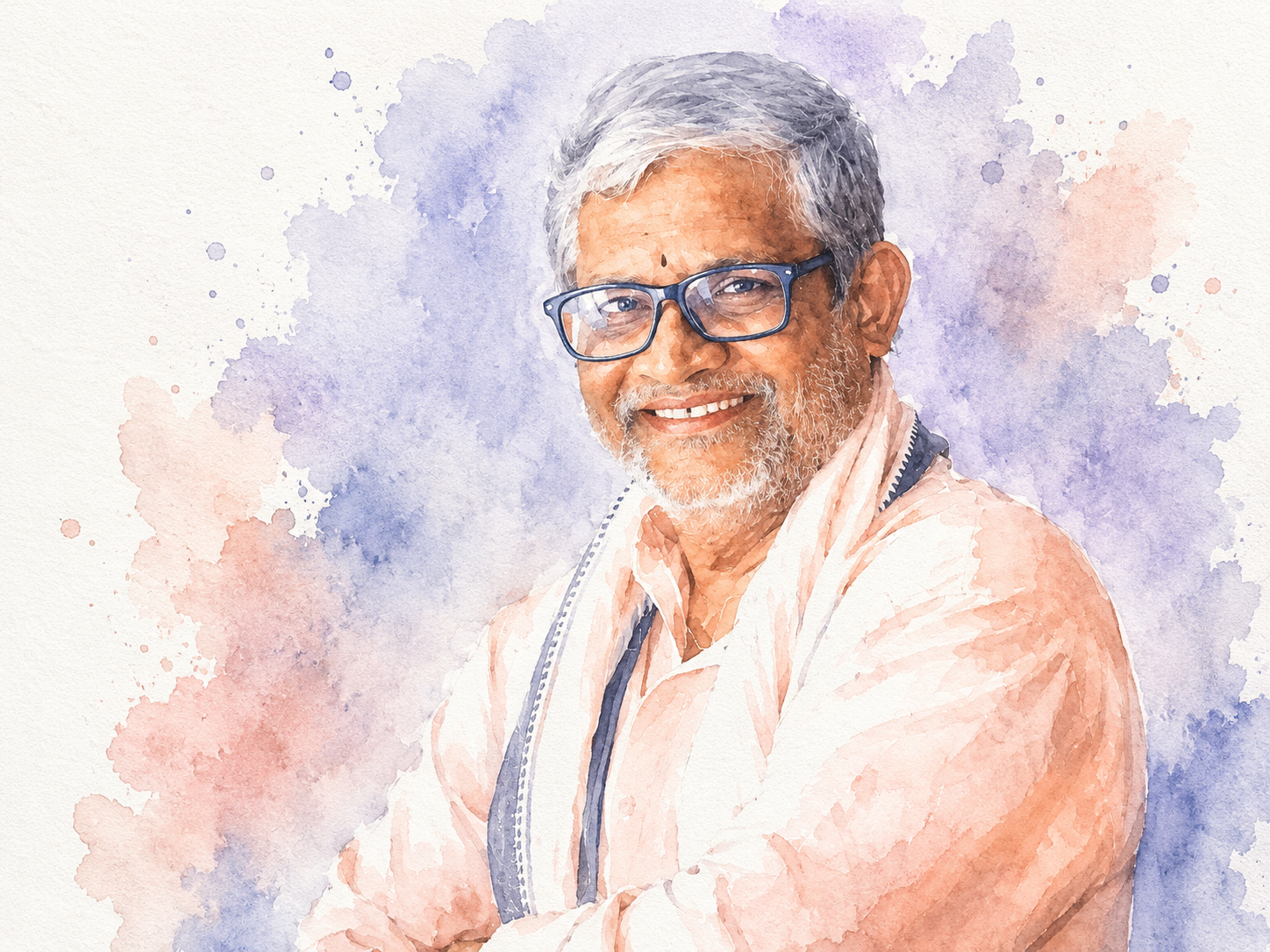
Konda Susmita Patel D/o Konda Surekha in such a young age has written book on SIVA PURANA with title RUDRA.
For today's generation she has explored the SIVA-PARVATI relationship...
Chiranjeevi
Actor
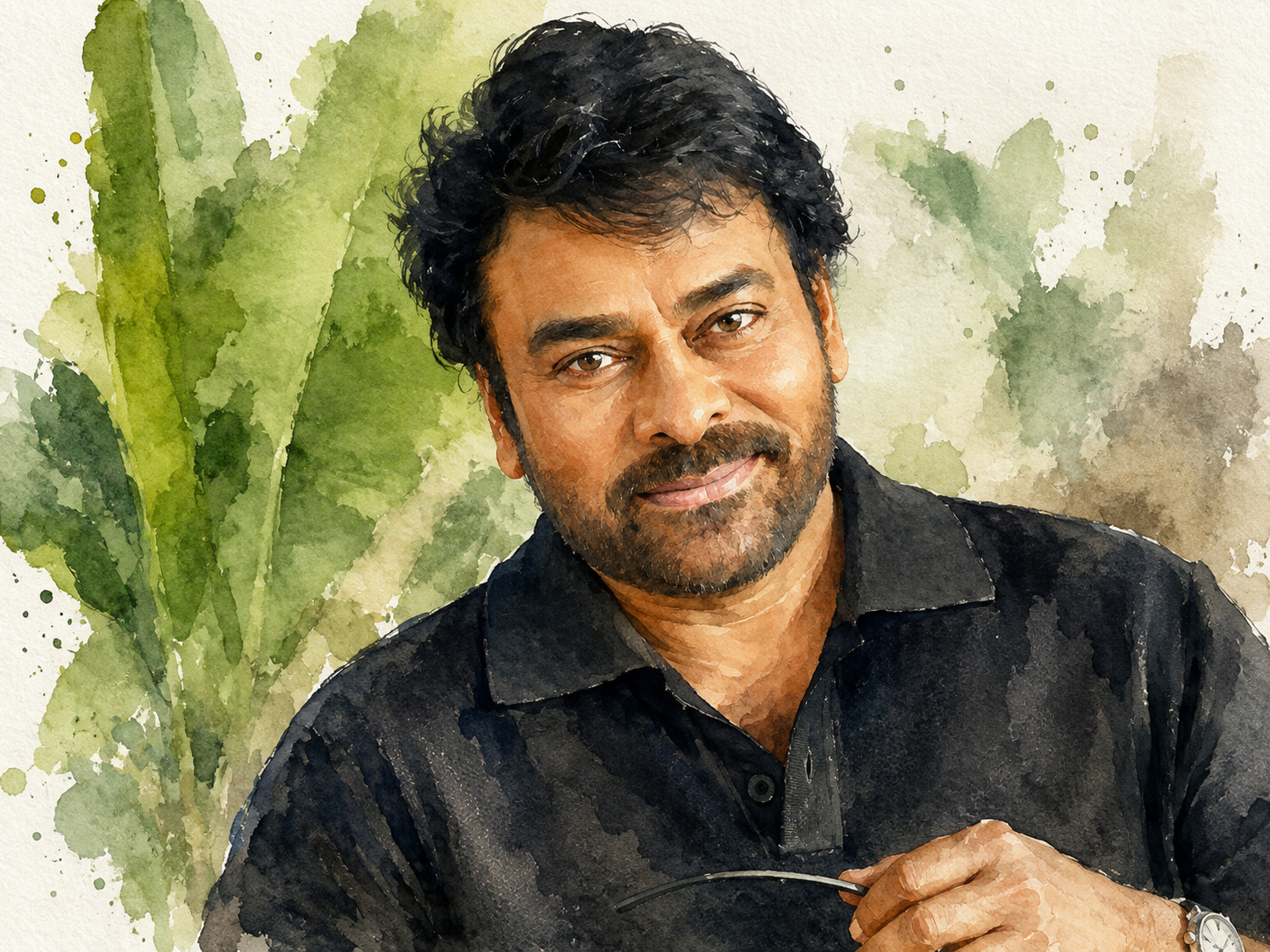
Konda Susmita Patel D/o Konda Surekha in such a young age has written book on SIVA PURANA with title RUDRA.
For today's generation she has explored the SIVA-PARVATI relationship.
I strongly believe today's youth would be connected with her writings & her thoughts inspire the youngsters as well.
I sincerely admire and appreciate this thoughtful writing based on ancient scriptures and her efforts to bring the youth closer to our PURANAS.
A work that strips Hindu mythology down to its fierce, beating heart.
Susmita doesn't soften Shiva for Western sensibilities or sanitize him for comfortable devotion...
From Critics
Critical Review
A work that strips Hindu mythology down to its fierce, beating heart.
Susmita doesn't soften Shiva for Western sensibilities or sanitize him for comfortable devotion—she shows us the god who sits in cremation grounds and holds poison in his throat, who loves with terrifying intensity and destroys with surgical compassion.
The chapter on Ardhanarishvara alone is worth the price of admission.
This writing presents mythology as people experienced it: transformative, challenging, and alive.

Dangerous and necessary in equal measure. Susmita has written a book that refuses every simple answer, that honors the complexity of devotion...
Her Shiva is immediate, contradictory and utterly present...
From Beta Readers
Early Reader Review
Dangerous and necessary in equal measure. Susmita has written a book that refuses every simple answer, that honors the complexity of devotion while never flinching from its costs.
Her Shiva is neither the benevolent father-figure of popular imagination nor the distant philosophical abstraction of academic study—he is immediate, contradictory, utterly present.
The way she weaves domestic intimacy with cosmic scope, the way she makes ancient stories speak to contemporary questions of gender, power, and freedom without ever feeling anachronistic—this is mastery.
Read this book if you're ready to have your understanding of the divine completely reconstructed.

There are people one thing in private and quite another in public — and then there is Susmita.
In all the years I have known her, what has struck me most is not just her courage in public life...
Naveen
Personal Testimonial
There are people one thing in private and quite another in public — and then there is Susmita.
In all the years I have known her, what has struck me most is not just her courage in public life, but the seamless way her private warmth and public strength exist in the same person, without contradiction.
She plans with clarity, leads with grace, and loves without condition.
She is the person who, in the middle of travel, will fall silent the moment an ambulance passes by — quietly, instinctively offering a prayer for a stranger she will never meet.
That small, unseen moment tells you everything about who she is. Brave in the world, tender at heart, and utterly pure in her intent — I am lucky to call her my Dosthuu.

If I had to describe Susmita in a single word, it would be unicorn — because there is simply no one else like her.
What sets her apart is a rare and extraordinary ability...
Ranjith Apparao
Bava
If I had to describe Susmita in a single word, it would be unicorn — because there is simply no one else like her.
What sets her apart is a rare and extraordinary ability: she can be fully present in two completely different worlds without letting one bleed into the other.
At home, she is soft, playful, and deeply devoted to her family — her parents, her children, her husband.
In the public world, she is a force. She questions, she challenges, she pushes past every limit when someone needs defending.
She never lets her political identity walk through her front door, and she never lets the tenderness of home make her hesitate when it is time to fight.
Her causes are real — empathy, social responsibility, women's empowerment — and she lives them from the inside out, because she knows that change begins at home.
She is her own harshest critic, her own greatest strength, and the most quietly self-sacrificing person I know — like a silkworm, giving everything of herself so others may have something beautiful.
What I have always admired most about Susmita is this: the woman you see in public is not a version she performs — it is simply who she is.
Away from the spotlight, she is just as warm, just as present, just as genuinely caring...
Dr. Manisha
Personal Testimonial
What I have always admired most about Susmita is this: the woman you see in public is not a version she performs — it is simply who she is.
Away from the spotlight, she is just as warm, just as present, just as genuinely caring.
She listens without judgment. She makes time for people no matter how full her day is.
She has a way of making everyone around her feel seen, safe, and important — and that is not a skill you can learn; it is something that lives in a person.
In public, she carries herself with confidence, grace, and a calm that people instinctively trust.
She never lets visibility change her, never lets recognition become ego.
Her purpose remains the same whether there is an audience or not.
Kind, strong, and deeply human — she is, at her core, a people person in the truest sense of the word.
Away from public attention, my sister is someone very few people truly get to see — and I consider that a privilege.
She keeps her circle small, her inner world guarded, but make no mistake: there is nothing fragile about that privacy...
Mr. Mahanth
Family Testimonial
Away from public attention, my sister is someone very few people truly get to see — and I consider that a privilege.
She keeps her circle small, her inner world guarded, but make no mistake: there is nothing fragile about that privacy.
When the people she loves need her, she doesn't hesitate, she doesn't calculate — she steps forward.
Growing up as the daughter of Konda Surekha and Konda Murali, she understood early that visibility is not always kind, and so she chose quiet strength over noise.
But she built her own place in people's hearts entirely on her own terms.
Young people trust her. Elders respect her. And that trust comes from something simple and rare — when she says she'll be there, she is.
Not halfway, not symbolically. Fully.
What I can say with certainty, as her sibling, is that there is almost no difference between who she is in public and who she is at home.
The care is the same. The sense of responsibility is the same. The stubbornness, too — very much the same.
She doesn't act strong; she is strong.
She carries people, problems, and expectations quietly, without making a show of it.
Relentless in her commitments, courageous when it costs her personally, and caring in the quiet, lifelong way that defines everything she does — that is my sister.

MEET THE AUTHOR
KONDA SUSMITA PATEL
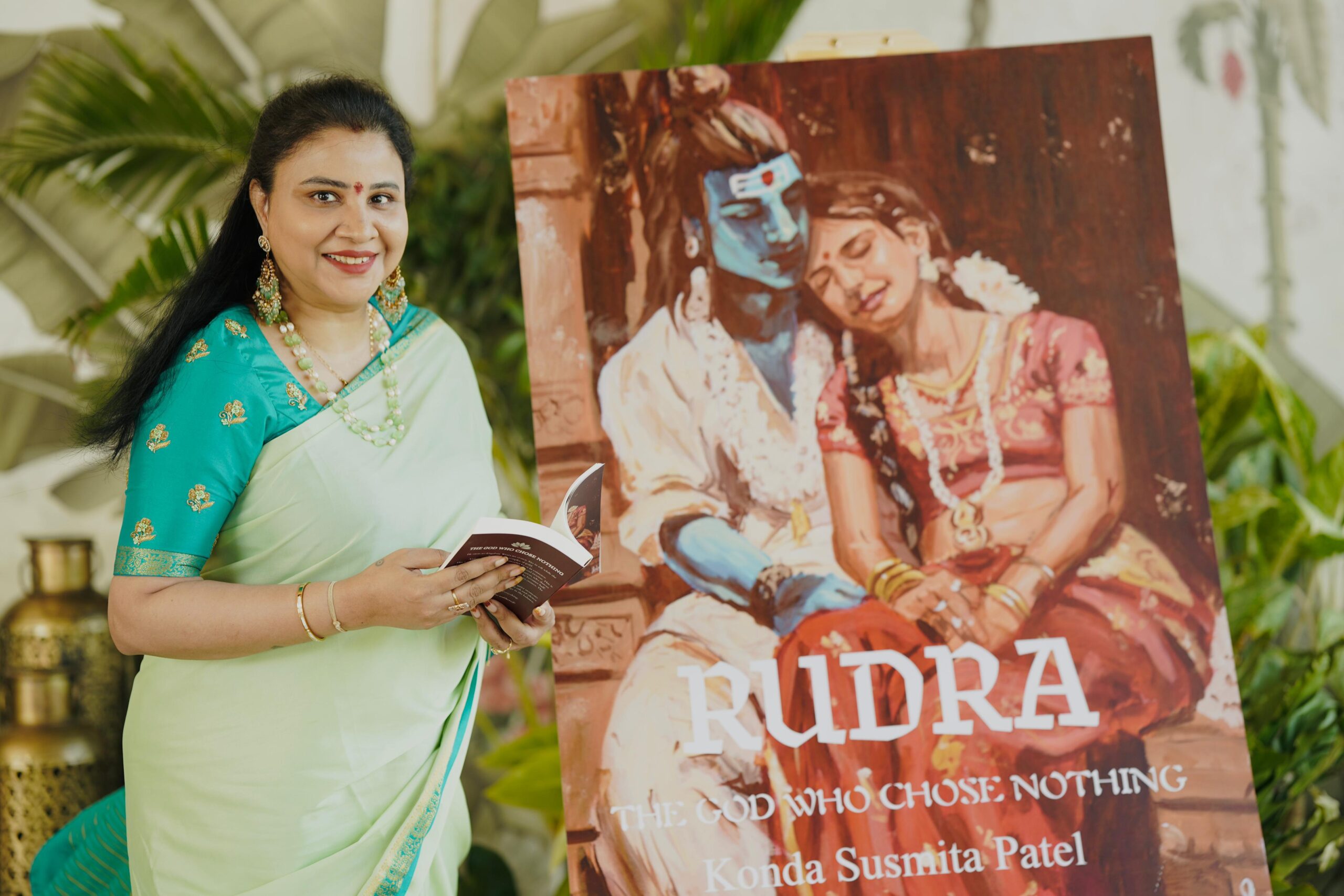
A public figure committed to empathy, social responsibility, and women’s empowerment, Konda Susmita Patel believes meaningful change begins at home.
RUDRA
The God Who Chose Nothing
is her debut book, a work that reflects years of lived philosophy, compassion, and public service.
Through her writing, she invites readers to discover spirituality not as distant worship but as something deeply woven into everyday life.
Three words that define her:
Women Power • Graceful • Balanced
She continues her work in public service while writing stories that deserve to be told
Why This Book Was Written
Inspired by the timeless wisdom of the Shiva Purana and Tantric traditions, the author set out to make these ancient teachings meaningful for modern readers. Rather than retelling familiar myths, the book explores the emotional, psychological, and philosophical dimensions of Shiva, revealing lessons about devotion, relationships, sacrifice, consciousness, and transformation that remain deeply relevant today. It is an invitation to experience mythology not as history, but as living wisdom.
| Author | Konda Susmita Patel |
|---|---|
| Genre | Spirituality • Mythology • Philosophy |
| Based On | Shiva Purana & Tantric Traditions |
| Language | English |
| Format | Paperback and eBook |
| Pages | 260 pages |
| Publisher | IndiePress |
Read the Synopsis
The God Who Chose Nothing reimagines key mythological narratives from the Puranas and Tantric traditions, presenting Shiva not as a distant deity but as an immediate presence—contradictory, impossible to contain in known categories.
The book opens with Shiva as primordial consciousness, creation itself. Enter Sati—the first love, whose choice to immolate herself at her father's yagna after he insults Shiva triggers the Tandava, Shiva's dance of destruction that nearly unmakes reality. Vishnu must intervene, scattering Sati's body across the earth. Shiva withdraws into meditation so deep it seems permanent.
But Sati returns as Parvati, daughter of the Himalayas. Despite warnings that Shiva is "dangerous" and "destroys what he loves," she seeks him out. What follows is a tapasya (spiritual austerity) so intense it forces the universe itself to take notice.
Shiva tests her repeatedly, but Parvati's devotion outlasts every obstacle. Their eventual union—portrayed through an actual wedding ceremony with real vows—leads to the first night of marriage, depicted with tenderness and psychological insight rare in mythology retellings.
The romance culminates in the Ardhanarishvara transformation: Shiva and Parvati literally merge into a single form, half-masculine and half-feminine, teaching that wholeness doesn't come from finding your "other half" but from recognizing the complete integration of opposites within yourself.
Ganesha and Kartikeya appear as brothers from different worlds—one playful and wise, one disciplined and martial. Their conversations reveal Shiva as a father who teaches through complementary methods: Ganesha places obstacles that force reflection; Kartikeya clears obstacles through direct action. Together they show that divine parenting, like human parenting, requires holding opposing forces in balance.
Ravana receives nuanced treatment rarely afforded to him. His tapasya is genuine—he severs his own heads one by one, offering them to Shiva until the god appears and grants him near-invincibility.
But when Ravana later tries to lift Mount Kailash itself, Shiva pins the mountain down with one toe, crushing him. In agony, Ravana composes the Shiva Tandava Stotram, one of the most beautiful hymns ever created.
He emerges as tragedy rather than villainy: the devotee who reached the divine but couldn't release the ego doing the reaching.
The Mahakala chapter explores Shiva as master of time—not subject to temporal flow but containing it, the stillness that allows all motion, the consciousness that witnesses endings without being touched by them.
Written as philosophical prose-poetry, it challenges readers to recognize their own nature as awareness rather than the phenomena awareness observes.
Through the Samudra Manthan (churning of the ocean), readers witness Shiva as Neelakantha. When the deadly poison emerges—so toxic it threatens all existence—Shiva drinks it without hesitation.
Parvati clasps his throat, preventing the poison from descending, and it remains lodged there permanently, staining his throat blue. The chapter explores why Shiva holds suffering without spreading it, transforming personal sacrifice into universal protection.
The author examines Shiva's relationship with the Aghoris—ascetics who dwell in cremation grounds and embrace what society designates as impure—with sensitivity and depth in the most controversial chapter.
This isn't an endorsement of extreme practices but an exploration of non-dual philosophy: the dissolution of boundaries between pure/impure, sacred/profane, acceptable/taboo.
It asks uncomfortable questions about whether spirituality that requires avoiding half of reality can actually be called spiritual.
Everything converges at Kailash, the cosmic axis. Here, karma becomes visible—ropes connecting every being to everyone they've affected and everyone who's affected them.
Souls confront accumulated consequences not through external judgment but through revelation. Shiva's stillness serves as a perfect mirror. Parvati appears not to rescue but to sustain—her love making the unbearable truth bearable.
The chapter reveals Kailash punishes nothing; it simply reveals everything.
The book operates on multiple levels simultaneously, offering interesting retellings that honor the source material while adding psychological depth and contemporary accessibility.
Explorations of non-duality, the relationship between consciousness and energy (Shiva and Shakti), karma as lived reality rather than an abstract concept, and the paradox of seeking freedom through form.
Every mythological story illuminates contemporary questions—How do we hold pain without spreading it? What does real partnership look like? How do we parent children toward their own wholeness? When does devotion become ego? How do we encounter death consciously?
Coming Soon
Where she Fell
By KONDA SUSMITA PATEL
Gallery